
15 Oct 2026
Toilet Installation in Miami: Questions to Ask First
Short answer: Ask about the quote's scope: shut-off valve, wax ring or seal type, flange condition, water supply line, caulking, and haul-away of the old toilet. If the floor flange is broken or the sewer line needs work, Gold Hands refers that out to a licensed plumber. Get everything in writing before work starts.
A toilet swap looks simple from the outside — old one out, new one in — but the details that get skipped are the ones that cause leaks, cracked flanges, or a toilet that rocks for years. A few sharp questions before you book will tell you whether the person coming out knows the difference between a routine replacement and a job that needs to be referred out.
What Counts as a Standard Toilet Replacement
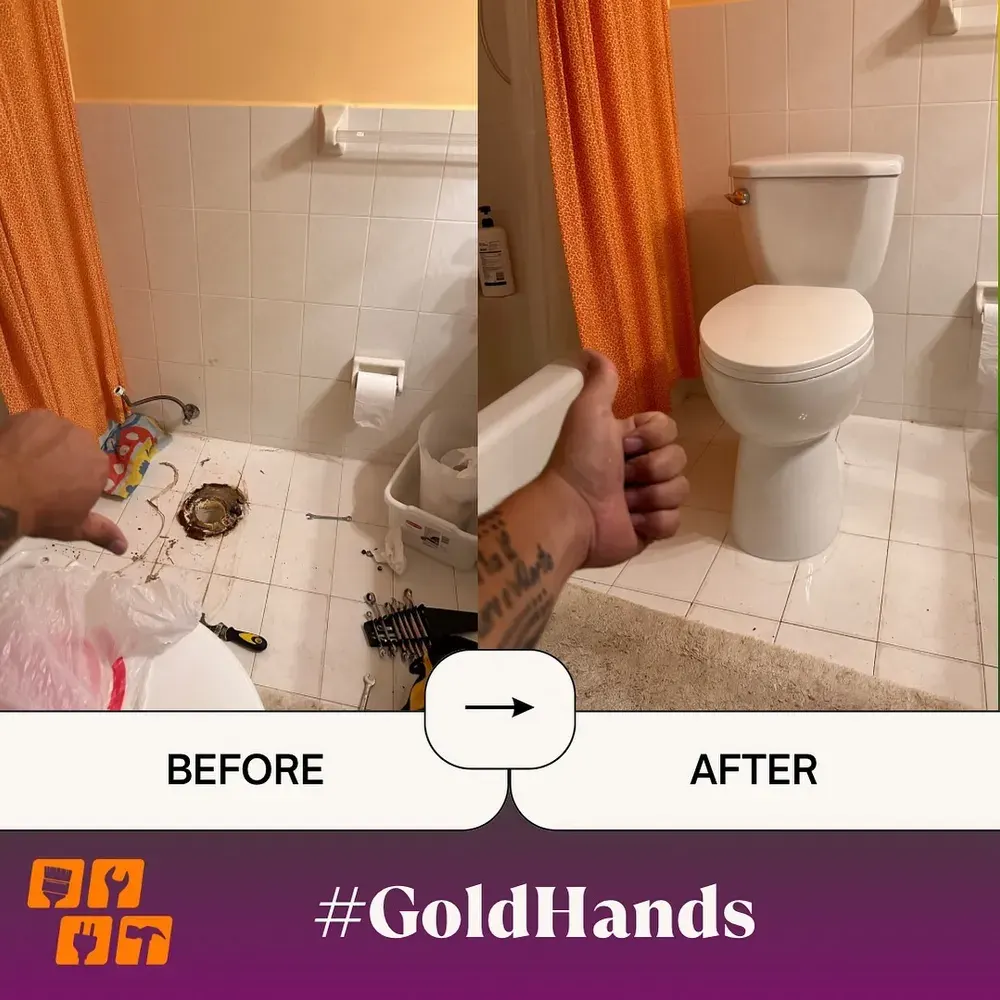
A straightforward swap means shutting off the water, draining the tank and bowl, disconnecting the supply line, unbolting the old toilet from the flange, scraping off the old wax ring, setting a new ring or wax-free seal, bolting down the new toilet, reconnecting the supply line, and caulking the base. That's handyman-level work in most Florida municipalities because it's replacing a fixture in the same spot, not adding new plumbing.
Where it crosses into different territory: relocating the toilet, rerouting the drain or vent, or correcting a flange that was set at the wrong height when the floor was tiled over. If someone starts talking about moving the drain line or reworking where the flange sits, that's plumbing work beyond a standard swap and it should be scoped and referred out rather than handled as a quick replacement.
Questions to Ask Before You Book
Get specific answers on the phone or in a quote before anyone touches your bathroom. Vague answers here are the biggest predictor of a job that runs long or costs more than expected.
- Does the price include removing and hauling away the old toilet?
- Is the wax ring or wax-free seal included, or billed as an extra part?
- Will you check the flange and subfloor for cracks or water damage before setting the new toilet?
- Am I supplying the new toilet and seat, or are you bringing one?
- What happens if the shut-off valve is seized, corroded, or leaking when you turn it?
- If the job runs longer than quoted, what's the rate for the extra time?
Answers That Should Worry You
Some answers signal you're about to have a bad day. A pro who won't commit to a price or scope in writing, or who brushes off questions about the flange and subfloor, is setting you up for a surprise invoice or a toilet that leaks at the base within a few months.
Reusing an old wax ring to save a trip to the supply house is another flag — wax rings are not reusable once compressed. So is dismissing the idea of checking for soft or water-stained subfloor around the base, especially in older Miami homes where slow leaks have had decades to do quiet damage.
- "We'll just reuse the old wax ring" — it won't seal properly a second time.
- No answer on who pays if the flange turns out to be cracked or the subfloor is soft.
- Won't put the scope or price in writing before starting.
- Can't say whether they carry insurance for water damage if something goes wrong.
What a Written Quote Should Itemize
A quote worth trusting breaks the job into parts instead of one lump number. Ask for labor, materials, and any contingency spelled out separately so you know what moves the final bill.
On our plumbing page, visits are priced by time rather than by job: Hourly Handyman runs $100 per hour with a 2-hour minimum, Half Day Handyman is $399 for 4 hours, and Full Day Handyman is $749 for 8 hours. There's no sales tax added, though card payments carry a 5% processing fee. A quote should tell you which of those blocks the job is expected to fit into, and what triggers moving to the next one — usually a seized valve, a damaged flange, or rotted subfloor found mid-job.
- Labor time or flat visit rate
- Toilet unit and seat, if supplied by the pro
- Wax ring or wax-free seal
- New supply line if the old one is brittle or too short
- Flange shims or repair, if needed
- Haul-away and disposal of the old toilet
- Card processing fee if paying by card
Miami Homes Bring Their Own Variables
Slab foundations are standard in Miami-Dade, which means the flange sits directly in concrete rather than on a wood subfloor — a cracked slab flange is a different repair than a wood-floor one. Older homes in neighborhoods like Shenandoah, Little Havana, or Coral Gables may still have cast iron drain lines or galvanized supply lines that are brittle and crack when disturbed, which can turn a simple swap into an unplanned parts run.
Layers of tile added over the years also raise the floor height without anyone adjusting the flange, leaving it recessed below the finished floor. That calls for a flange extender or spacer kit rather than forcing a standard wax ring to bridge the gap. If you're in a condo or HOA building, ask whether building management needs a certificate of insurance before the work crew is let into a common hallway or unit — being insured and bonded covers that requirement.
Frequently asked questions
Do I need a permit to replace a toilet in Miami?
A straight swap in the same location usually doesn't require a permit since no new plumbing lines are installed. Relocating the toilet, rerouting a drain, or altering vent piping typically does require a plumbing permit and inspection, and that scope gets referred out to a trade professional for the permitted work.
How long does a toilet installation or replacement take?
A straightforward swap with no surprises usually fits inside a 2-hour minimum visit. If the shut-off valve is seized, the flange is damaged, or the old supply line needs replacing, expect it to run closer to a half-day block.
Can I buy my own toilet, or should I let the pro supply it?
Either works. Buying your own gives you control over brand, height, and flush type, but confirm the rough-in measurement (distance from the wall to the drain center) matches your bathroom before you buy, since most are 12 inches but older Miami homes sometimes vary.
What if the toilet shut-off valve doesn't work?
This is common in older homes where the valve hasn't been turned in years. A pro should be able to shut off water at the main if the valve is seized, then recommend replacing the stop valve itself — ask whether that's included in the quote or billed as an add-on.
Is caulking around the base of a new toilet necessary?
Yes, in Florida's humidity it helps keep water from wicking under the base and softening the subfloor or slab finish. Many pros leave a small gap at the back uncaulked so a slow leak shows up as a puddle instead of hiding under the toilet.
Book it
- Plumbing in Miami: what is included and how pricing works
- Plumbing across all our service areas
- Handyman in Miami
- Book online, or compare hourly, Half Day and Full Day
Prefer to talk it through? Call +1 (786) 788-8714.